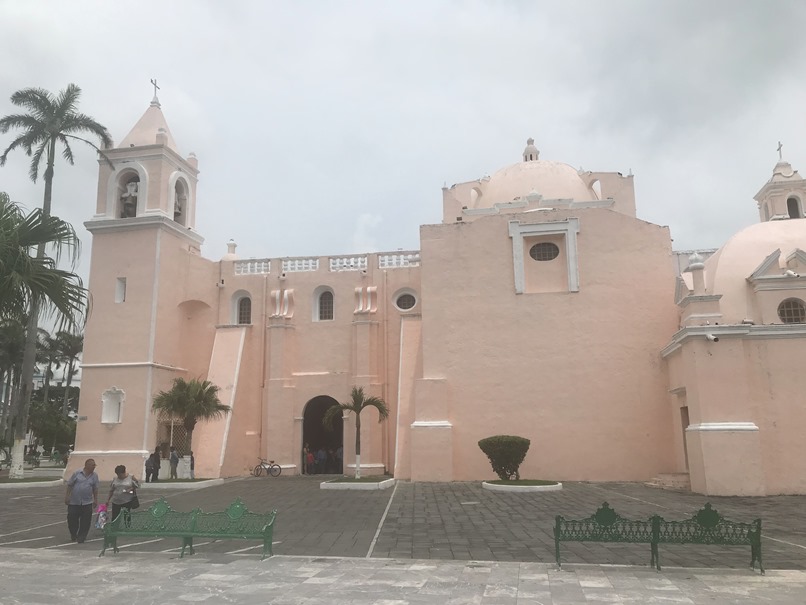
Day 60 – Xalapa Anthropology Museum (07/07/19)

Today we travelled to Xalapa and I insisted on decent accommodation after the horrendous ordeal that was the pipe shower in Veracruz. We even stayed in a hotel with a water feature – I’m feeling terribly fancy (it was also very cheap.)

We took a taxi to the anthropology museum and then thought we should have a decent breakfast before we start a large museum. After all breakfast is the most important meal of the day, or so I hear. So we grabbed scrambled eggs in the museum cafe.

We found Xalapa
DIY tortilla hot pockets

I was impressed by how the museum was laid out along a central corridor with rooms off it concentrating on different civiliaztions in the area. The earliest civilisations at ~1300BC were first and then the rooms moved forwards in time. We took the audio tour of the museum and it was very easy to use with artefacts having QR codes you could scan to hear descriptions about them.

The most impressive pieces are of course the early pre-classic giant heads, made by the Olmec culture. They are from around 900BC and each one is carved from a single basalt boulder. They were transported almost 90miles from the north of Veracruz before they were carved, so it is thought they represent powerful Olmec leaders.

The giant Olmec heads are quite impressive

Next we saw a variety of classical period items, including a statue to Mictlantechutli the god of the underworld and of course statues of Tlaloc god of rain

Mictlantechutli – skeletal god of the under worlds
Tlaloc god of rain (he always has goggles on)

Some ceramics from the classic period had even been found with their mould which is quite rare as it is usually destroyed to get the piece out of the mould.

Rare ceramic figurine and its mould

We also saw recreations of painted murals which were found at the nearby El Tajin archaeological site.

Murals that survived at El Tajin

In the last section of the museum there were examples of cranial deformation practised in the region. Cranial deformation was a widespread practice for many Mayan cultures and was achieved by tying boards around the skulls of infants before the skulls plates were fully formed. If the child was destined to be part of the ruling classes or hold high office then a conical shape was produced as this brought them closer to the form of the gods. The general population were only allowed flatten the sides of the skull though, not create the pointed top.

Post-classical period cranial deformation

After the museum it was a bit of a walk to the centre so we took a detour via the Tonati park. It was like a jungle inside with lots of water features and green plants. Everybody seemed to be there to enjoy the park on the Sunday.

Tonati park is a hidden jungle in the city

I then had a moment of inspiration and chose a great restaurant as we were walking past that was great. I decided to have pasta which I hoovered up ever so quickly. Afterall it had been a busy day learning about all the history in the area at the museum. We also tried some super cheap local cocktails as a bit of a treat.

Loving the pasta
Mmm cocktails

When we walked back to the hotel we came across the end of a big public event, we don’t know what it was for, but it had a good marching band. We also saw some traditional musicians out busking on the streets on the way back.
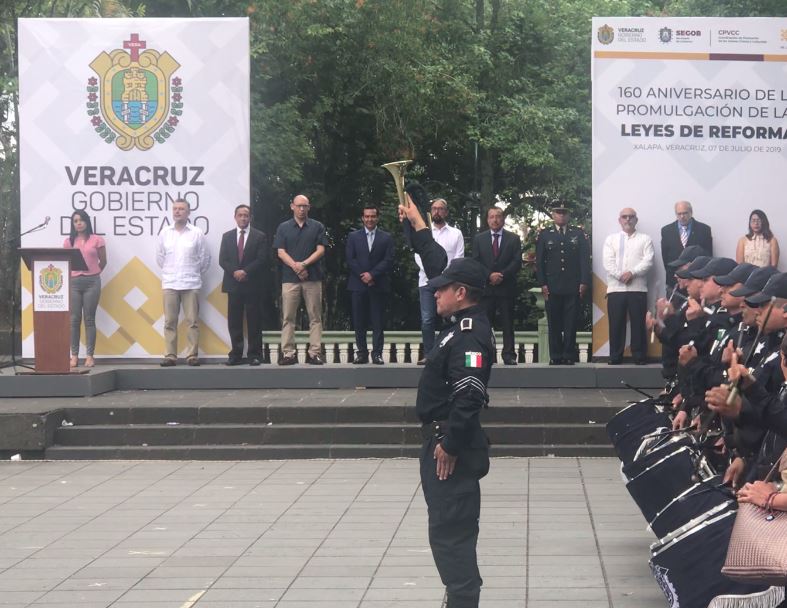
Marching band
Traditionally dressed buskers

Day 59 – Tlacotalpan (06/07/19)

Today we went to our 12th UNESCO of the trip and we really needn’t have. Sometimes not all UNESCOs are created equal and this was definitely subpar.

First we grabbed a quick breakfast near where we were staying and took the bus for three hours to Tlacotalpan. Breakfast was at least very cheap, only 35pesos for scrambled eggs and beans with a drink – I love horchata!

Scrambled eggs with horchata – a decent Mexican breakfast
We finally reached Tlacotalpan

Tlacotalpan was established on an island in the middle of the Papaloapan river in 1550. It was an important inland river port during the colonial era up until the railways were built and then it became fairly irrelevant. It was designated a UNESCO because the whole town has maintained its 17th century layout and architecture. This is because the rest of history has mostly forgotten about Tlacotalpan since then. Today it is mostly supported by fishing and tourism.

Its official, it is really a UNESCO
Tlacotalpan is locally famous for all its arches on buildings
The church at least was busy with a few people around
At least they paint the houses interesting colours

We had an ok shrimp meal next to the river with a gang of bikers on the table next to us.

Shrimp were passable, but it wasn’t the greatest town to find good food in

At least we had an ice cream. Overall I do not recommend.

Lime ice cream is the best

After another three hours on the bus back to Veracruz we were pretty tired so we gave in and had a Dominos pizza. Shock horror though, garlic bread is not a thing at Mexican Dominos.

The pizza doesn’t do much to redeem our accommodation here

Day 58 – San Juan de Ulua Fort in Veracruz (05/07/19)

Veracruz is so very hot. I am literally melting after being used to the nice cool weather at the top of the mountains. At least it was air conditioned for breakfast. The locals all say you have to try cafe lechero, a local speciality with hot milk. First you get a glass with some coffee in it, then a waiter with two big tea pots appears and asks you how much more coffee you would like. Then they fill the rest of the glass up with warm milk from the second tea pot. Sadly Dave thought the end result was rather like instant coffee with too much milk. I was glad I stuck to my orange juice.

Cafe lechero – don’t bother

The omelette with ham and cheese was ok though so we were fed for the morning at least.

Omelette and obligatory beans

At least I’m by the seaside – or rather the industrial port. It’s not very glam but at least there is a sign I can have my photo by!

What a view

Literally the only way to San Juan de Ulua Fort is by taxi which is expensive or the embarrassing tourist bus with terrible papiermache models. It had terrible music, uncomfortable benches with no padding or suspension and an annoying voiceover in Spanish. This was presumably telling us about the joys of the port which included container ships, disused train stations and a water treatment works.

Proper tourist

At least we arrived at San Juan de Ulua Fort. The fort is built on an island which forms the mouth of the port of Veracruz. The island was named by an expedition in 1518 and in 1519 it was used by Cortez to meet with emissaries from Moctezuma II.

Avast I see pirates

Fort construction started in 1565 and in 1568 it played a role in temporarily trapping John Hawkins and Francis Drake before they made their escape. Its primary purpose was to deter English pirates and protect the shipping port which formed a link in Spanish trade with Asia as goods were transported over the isthmus and set sail to Spain from Veracruz. Today it’s actually Mexico’s primary import/export route for cars and other consumer goods.

The fort still sees a lot of shipping go by it

The fort is actually built from coral dredged up from the port to use as a building material. As a fort it did deter pirates, but it didn’t fare very well against nation states. It was captured twice by the French, first in 1836 and again in 1863 when they installed Maximilian as emperor of Mexico. It was also captured twice by the Americans, once during the Mexican-American war in 1848 and then again in 1914 during the Mexican revolution, to protect their oil interests in the region.

Powder magazines were separate from the main fort, which made them good prison cells

The powder magazines were badly designed and only used briefly as they let in moisture and made the gunpowder damp, so they were converted to prison cells. In 1914 when the Americans captured the fort they released all the political prisoners and moved the criminal prisoners to the city jail. Then systematically fumigated and cleaned the cells which were in such a terrible state they likened it to opening the doors to Dante’s inferno.

The bridge of sighs on the way to prison

After seeing round the fort it was so hot we definitely deserved an ice cream from the nearby street stalls.

Coconut & lime ice creams were the best

We then took the bus back and had fish for lunch. It wasn’t the best but we had the entertainment of being surrounded by five stuffed puffer fish while eating so I wasn’t particularly hungry at that point.

The hovering puffer fish will take its rewenge

I have to say I am completely horrified by our accommodation. This morning I found the shower was just a pipe in the wall and I think it’s just better to smell at this point. Sometimes cheap can be too cheap (although we mainly chose this for the location nearer the sea).

Day 57 – Helia Bravo Hollis and Tehuacan Ruins (04/07/19)

Tehuacan is a very interesting place to find where to pick up the bus from. For anything local you don’t go to the bus station and instead pick it up from the road which we are used to. What we are not used to is there being so many different options for where to pick up a bus from. It ended up taking us over an hour to find the right place because everyone we asked instead of saying they didn’t know gave us their best guess but didn’t tell us it was only a guess. We spent a good 10mins in a queue for a beauty training salon because we were told it was a bus stop and we only twigged when everyone went in for the class. In case you want to know to get to the Helia Bravo Hollis gardens, you head to Zapotitlan and can get the bus from the corner of Calle 1 Sur and Calle 7 Oriente.

The area the gardens are in is known as the Tehuacan-cuicatian biosphere and is our 11th UNESCO of the trip. It was made a UNESCO because of the diversity of cactus species and its archaeological significance in the early domestication of crops. The valley currently contains the densest forests of columnar cacti in the world.

Nobody else was at the Helia Bravo gardens, so we had a private tour with Filipe who had only a little more English than we had Spanish but we managed to understand each other.

The garden was named for Senora Helia Bravo Hollis, a highly respected botanist. She grew up during the Mexican revolutionary war, but afterwards studied at the university in Mexico City as a biologist, obtaining her masters degree in 1931. She studied cacti and their different types, establishing the Mexican society for cacti in 1951.

No one else here

We saw lots of different types of cacti on our tour as well as other plants. The columnar cacti are very tall, but by forming a root network they avoid falling down in the wind. 

Columnar cacti connect their root systems for stability

This elephant foot tree is estimated to be over 1500 years old and has been the subject of a lot of research work to establish its age.

Elephants foot tree – over 1500 years old

The agave plant is used for making mezcal, but if left alone it will flower on its 12th year. A tall stem grows over a year or so, then on one day all the seed pods open and the seeds are transported in the wind. Then the plant dies and gradually just falls over.

Agave plant after its 12th year

This visnaga cactus can live to about 1000 years old but is currently a baby at 200 years

Visnaga cactus – 200yrs old

After the Helia Bravo garden we went back to Tehuacan and again had another fun adventure trying to find the right collectivo to go to the nearby Tehuacan ruins. Eventually we found a collectivo with a little ruin symbol on the dash so we got to go.

The Tehuacan ruins are home to the first known temple to Xipe Totec – the Flayed Lord, who is often depicted without any skin. He was a god of fertility, agriculture and war. The site has two altars, one where the victim would be killed and a second where they would be skinned before the priest donned their skin.

The site was used for ceremonies for Xipe Totec by the Popolocas between 1000-1260AD up until they were conquered by the Aztecs

Main temple with two altars

The museum was very impressive and houses three large statues, two are warriors, a jaguar warrior and an eagle warrior. The warriors once stood flanking the stairs to the main temple.

Eagle warrior
Jaguar warrior

The largest of the three statues is Coatlicue (also known as the lady of the snake skirt). Coatlicue was the goddess who gave birth to the moon, stars and the god of the sun and war Huitzlipochitli. She was the patron of women who died in childbirth, which was seen to be equal to that of a warrior dying on the battlefield.

The legend says that Coatlicue was sweeping in a temple one day when a ball of feathers fell on her and she became pregnant. Her daughter Coyolxauhqui rallied her 400 other siblings as she thought the new child would be too powerful. The story has two endings, in one Huitzlipochitli is born fully grown and armed for battle, he kills his siblings and saves his mother. In the alternate ending the other children decapitate Coatlicue, and Huitzlipochitli is born in the same instant and kills most of them. He in turn decapitates Coyolxauhqui the ring leader and throws her head into the sky to be the moon.

Statue of Coatlicue – goddess of the snake skirts

Once we went back to town we then had a very filling azteca soup where they poured the soup on top of the fried tortilla chips in front of us. It was very theatrical. We also had a large open tlayuda – it was far too much for us to manage in the end.

Azteca soup is the best
Huge tlayuda

Soon afterwards we caught an evening bus to Veracruz and arrived there at 10:30pm and happily dumped our bags and slept.

Day 56 – Caught by the Police (03/07/19)

We took an early bus to Tehuacan today. Unfortunately it was so early Boulenc, my favourite breakfast, place wasn’t open yet so no nice food for me. 

We had a very eventful trip. Everything was going fine and we had the right tickets and told the conductor where we were going. We checked google maps as we went along so we knew when to start getting ready and we saw we were driving past Tehuacan on the highway and we missed the junction to get off. Well the conductor was asleep during this so we had to wake him up and it took him a long time to get his bearings and realise what the problem was. Of course the bus was still travelling along the highway during all of this. He told us everything was fine and we’d get there soon, but we were getting further and further away from Tehuacan. Finally he talked to the bus driver and believed that yes we had passed by Tehuacan without stopping and he tried to convince us to go to another 3 hrs on to Puebla instead. However, we had booked accommodation in Tehuacan so that didn’t really help us. Finally after we were over 40km away from Tehuacan he proposed leaving us on the side of the road near a petrol station where buses would pick us up going in the other direction.

Literally abandoned in the desert

Well we were abandoned on the side of the road and found out that the petrol station on both sides of the road was closed and nothing was stopping. We tried flagging down every bus that went past but everything just drove on by and it was looking less and less likely we would be going anywhere at this rate. There were some police officers checking the speed of the traffic so we asked them if buses picked up people from around here and if not where we should go. Fortunately he was very helpful and offered us a lift in the back of the police car since he was going back in the direction of Tehuacan in 5mins.

Its the federales – machine gun not mounted sadly

It was extremely windy in the back of the police truck so I hunkered down to get out of the wind. He dropped us off at the highway junction to Tehuacan and we quickly flagged down a collectivo to get into the centre.

Very comfortable and definitely safety conscious

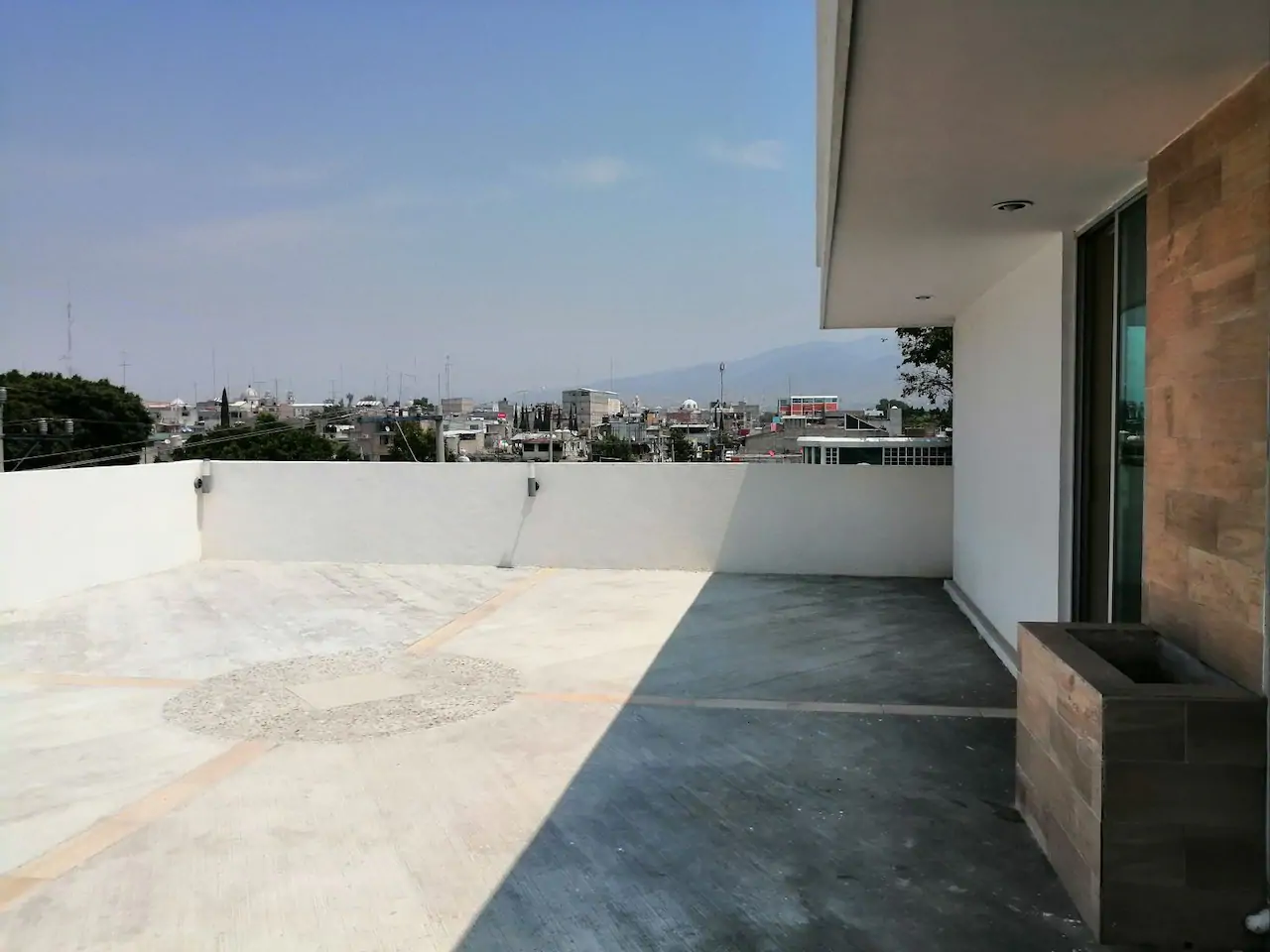
I have never seen so many shoe shops in a town before, I think they must be famous for it. Unfortunately I was paying too much attention to the shoe shops and not enough on the uneven pedestrian path and fell over and twisted my ankle. Ouch! We finally arrived at our accommodation for the night and I could rest up my ankle. It was pretty nice and even had table football and a pool table, not that we used it. We had a nice roof top terrace too.

Games room
Roof top terrace

I needed a bit of light exercise to stop my ankle from swelling up too much so we went out for pizza and magnums.

Nom Nom, pizza

Day 55 – Cookery Class in Oaxaca (02/07/19)

We had a light breakfast today because we were going to a cooking class. I have been looking forward to this for ages. 

Light breakfast of avocado on toast again

We took the class with Oscar at Casa Crespo who was amazing and very clearly explained each step in English and got everyone involved in preparing different parts of the meal. When we met we had an amazing hot chocolate and discussed what we wanted to make as a group. There were 6 of us and we all got to chip in and say what we wanted to make – I was very in favour of doing a chocolate mole and chocolate tamales because who doesn’t love chocolate!

Oscar took us on a tour around the local market and showed us the differences between different ingredients. The market was full of different fresh and dried chillies, pulses as well as vegetables and meats.

Dried beans by the bucket load
All kinds of dried chillies and nuts
Fresh fruit and vegetables, including super cheap avocados

Oscar gave us a lot of information about the different ingredients. For example the chickens in Mexico are all yellow not because they are corn fed, but they are actually fed on marigold seeds. Mexicans like their chickens yellow, so they keep feeding them marigold seeds.

Yellow chickens

First we made a very traditional mole with chillies, tomato, onion, spices and chocolate. Generally for the sauces all the ingredients are prepped, then all just blended together before heating.

For each dish we started with the ingredients partially prepped and then blended it

Next was Mancha Manteles Mixteco to go with chicken – essentially a sauce made with tomatillos, chillies and spices.

Smells good already

Alongside that we started on a squash flower soup – it involved squash, mushrooms and chillies as well as the squash flowers.

Not sure how we feel about flower soup yet

For our second mole the ingredients became a little more interesting. This one included giant flying ants. Oscar told us how they only appear for a couple of days each year, so are very expensive out of season. We dry fried the ants to make them crispy, then added into the blender with the typical chillies, tomato, spices etc.

Fry the ants until they just start to crackle and become crispy

To make the tamales we made a dough using corn tortilla flour, chocolate and condensed milk which we then stuffed into the corn husks before steaming.

Claire is excited by chocolate tamales
The chocolate dough is then steamed inside corn husks

We also made tortillas both standard (with dyed patterns on them) and a tortilla with squash flowers, and a ceviche at some point too. It was all such a blur as we worked together on so many different recipes all at once.

After we had finished we sat down to eat our creations.

Crackers with a local soft cheese to start
Ceviche with avocado
Squash flower soup was surprisingly awesome
Stuffed relleno chilli with sweet mole sauce and fruits
Traditional mole with duck
Mole & duck – with squash flower tortilla is amazing
Steamed fish with the caper sauce and pickled carrot
Artistic tortilla with the flying ant mole and pork rib
Chocolate tamale for dessert
Different local mezcals we tasted

We even got the chance to try different local mezcals and got an introduction to how they were made. I found most of the way too strong and like fire water but there were two from five which were smoother which I prepared. Since most mexcal in the area is home brewed you have no idea what you are going to get.

After all of that we were absolutely stuffed, but the standard 4pm thunderstorm had rolled in. So we sat around chatting and drinking some more mezcal until the rain eased off and we could head home to rest our stomachs.

Day 54 – Mitla Ruins and Hierve el Agua (01/07/19)

Breakfast was back at Boulenc and I really enjoyed it. I had half a plate of molletes and half a plate of scrambled egg and bacon on sourdough.

Molettes are basically a beans and cheese toasty

Today we went all the way to Mitla but when we arrived there weren’t enough people in the collectivo van to go up to Hierve el Agua. In the end we opted to instead visit the Mitla ruins and try again later instead of paying extra to go up in a taxi. While Monte Alban was the most important Zapotec political centre, Mitla was its most important religious centre.

We found Mitla
It might not look much from far away, but up close its impressive

Mitla is completely unique among meso-american sites, as it is decorated by mosaic fretwork which has been assembled without mortar. Its the only place where this has ever been known in the meso-american world. I think the abstract designs are quite pretty.

Each room had slightly different mosaics
Incredible all the blocks are an interference fit

Ace, as soon as we arrive back at the bus stop we are lucky to have enough people to go to Hierve El Agua in the collectivo. We went up in a flat bed truck converted to have a little roof over the back. Not the most comfortable ride with 8 other people and oh lord the road is windy, but we had a great view from the truck. 

Travel in luxury comfort and style for 50 pesos

Hierve El Agua literally translated means “boil the water”. Formed on the edges of two cliffs spring water has been running for thousands of years and is over-saturated in calcium carbonate. Much like stalactites the steady trickles of water have eventually formed what appear to be huge waterfalls, but are in fact calcium carbonate deposits.
The smaller waterfall looks more impressive to me
The larger waterfall behind has pools for swimming at the top

The water is pretty cold coming straight from the spring but I at least got my feet wet!

Right at the edge!
Hubble bubble – this is the main spring for one of the waterfalls

I enjoyed having my brownie on top of the world!

Brownies don’t travel well, but they still taste good

After waking around the site we had a long wait for 3 extra people since they wouldn’t move until there were 12 people. All the truck drivers were playing marbles but at least there was a seat and I got through one of my audiobooks. It was a nice group of people in the truck back to Mitla and we took a collectivo taxi with them back to Oaxaca. We were feeling pretty hungry by this point so we went to La Popular an ironically very popular restaurant and had tostada and quesadillas with loads of mushrooms yum.

Tasty tostada

It’s the beginning of the month – look how far we have travelled.

Day 53 – Yagul Ruins, Tlacolula Market, Tree of Tule (30/06/19)

Oh no our favourite breakfast place Boulenc is closed on Sundays so we had to find an alternative down the street. It was a very interesting post-modern interpretation of a croque monsieur – it was a cold cheese and ham sandwich which had not seen a grill with warm mushrooms on top. Interesting but I was too hungry to complain. Tea also seemed a confusing idea – I eventually got a cup of hot water with lots of bits in it.

This is some kind of heresy against the croque monsieur & tea

We then went to Yagul ruins to get our 10th UNESCO. Or rather the caves and ruins combined are a UNESCO as they were the prehistoric birthplace of the domestication of plants in North America.

Its a UNESCO

The Zapotec ruins are on the hill above looking down to the caves. It’s a very long walk up from the main road.

It was a very long walk up

The site isn’t too extensive, but it does contain the second largest ball court in meso-america after the one at Chichen Itza.

Second largest ball court, no one wants to play with Claire though

It also has an area known as the palace of 6 plazas, as cunningly its built around 6 plazas. Its relatively unusual for a Zapotec site and actually feels more Roman in layout. It’s a maze of corridors leading to small rooms which then lead to yet another plaza. To get anywhere I think you had to go through many peoples bedrooms.

The palace of 6 plazas

Otherwise the site plays host to a lot of cacti and not too many visitors. We were the only ones there until a coach load arrived and we promptly moved on.

Prickly pear cactus

We took a very long detour to walk to the Yagul caves. I had previously researched it was easier to get there from the road rather than the ruins but we decided to go for a walk through the spiky undergrowth in the middle of the mid-day sun. What was that saying about mad dogs and Englishmen? At least we had some good views.

At times the path pretty much disappears
You do get a good view back across the valley

Along the way I found many rocks to climb

Amongst the spiky plants there were also rocks to climb

I even found my own cave

Claire’s latest Airbnb find

While the seed evidence in the caves are what give the site its UNESCO designation, there are also some paintings on the rock walls nearby. You can see them from the road, but they are the only real indication you’ve found the site.

Cave man paintings

After all that walking I fancied something to eat so we got a taxi to Tlacolula and went around the large Sunday market there to find barbacoa. The market was really interesting, outside it takes over about 6 blocks of the town, while inside you find all the food being cooked.

The market was buzzing with food, cooking and all the locals out for the day

Barbacoa is a traditional dish, essentially its goat cooked in a pit in the ground for a very long time. Its actually really tasty, though quite fatty, definitely choose the “spicy” option.

Gary the goat was quite tasty

To find the areas serving barbacoa just keep an eye out for the goats heads on the wall behind.

Gary watches on as you eat

After lunch we went to Santa Maria del Tule to look at a tree. Now wait it is a very impressive tree, in fact it’s the widest tree in the world although there is some debate about how you measure “largest”. It certainly isn’t as tall as the Californian redwoods for example, but it is very wide. Though no one is sure if they should measure the circumference as a best fit circle, or by wrapping the tape measure into every nook and cranny.

Huuuuuuuge tree

The park in the centre of El Tule was well looked after with flower beds and colourfully painted buildings.

El Tule is very pretty in the centre
Pretending to be angelic

After all that hard work visiting so many places I deserved a treat. So we had ice cream at the square the walking tour guide recommended on our first day in Oaxaca. Dave tried some interesting combinations including tuna and zapote negro. Zapote negro turned out to be black persimmon while tuna is actually the sweet fruit of the prickly pear cactus. I played it safe with pinacolada and mango ice cream.

Tuna ice cream is tasty

That evening we went out to a highly rated tlayuda restaurant El Negro but it was terrible. The marimba players were so loud you couldn’t hear each other or place your order without shouting and the tlayuda’s weren’t great. For some reason the meat was on the outside, not with the filling and the cheese was so stringy it was hard to eat. When they started doing traditional dances in front of us we decided to leave and take the rest of our food as takeout.

Cheese overload tlayuda
The half hearted dance by the staff was the signal to make our escape

Day 52 – Botanical Garden in Oaxaca (29/06/19)

We opted for a quick breakfast and took a mushroom pannini as take out from our favourite breakfast place. We ate next to the Santo Domingo monastary and watched a lot of school kids prepare for a parade with costumes and musical instruments.

As the botanical garden mostly represents the local climate, there isn’t a lot of shade, so free sun hats are available to borrow.

Excellent garden hats

The monastery had been in use by the military as a barracks, store and parade ground, but was eventually returned to the city. Several ideas were put forward for what to do with the area, including convention centres and multi-storey car parking. In the end though, thanks to the efforts of local artists, it was agreed to setup the botanical garden to reflect the diversity of Oaxacan culture. The garden was established by transplanting adult plants and opened in 1998.

Squash and other food plants are grown in raised beds

The garden is divided into thematic areas, the first we visited was based around agriculture. Here we saw squash plants, which were the first domesticated plant in Oaxaca (seed evidence indicates 10,000 years ago). We also saw chilli peppers, which are a great source of vitamins in the local diet and maize, as well as the wild ancestor for maize.

The original type of Maize plant

The layout of the garden is inspired by the Mitla archeological site, with paths taking zig-zag routes and the overall layout and design based around right angles. Around the entire garden all the paths are cobbled, but rather than have mortar between the stones, they are held in place with a stake. This allows water to drain through the path directly into the soil.

A lot of thought has gone into the design of the garden and making it sustainable. Gargoyles spit rain water from the roof on to these areas of stones which then drains into underground containers to be stored for later use. Electrical power is generated from solar power and the site produces far more than it needs.

Clever water capture system

The garden also undertakes active research projects, the greenhouse here has apparently won architectural awards. Its split into two with each half growing the same plants, but researchers can modify the climate in the two different halves to see how plants fare.

Research greenhouse with two differing climates

We saw some Ceiba trees, these were a sacred tree for Mixtec. The legend says that the first royal couple came from a Ceiba tree. The gods threw an arrow at the tree and one half became man and other woman. Otherwise they do a good job of fixing nitrogen in the soil and because they don’t loose their leaves during the dry season they are an important source of shade.

Ceiba trees protect their trunks with vicious spikes

Copal trees are also in the garden – they have a reddish appearance and the bark permanently peels. Copal was also used by meso-american cultures for incense to burn in ceremonies.

The bark of Copal trees is constantly peeling and being replenished

Chandelier cactus can grow to quite a size if they survive parasites or damage for long enough.

Chandelier cactus is an impressive sight

Agave plants are everywhere in Chiapas. They are actually farmed as they are used as the basis for Mezcal spirits and for Pulque – an alcoholic drink that all the locals swear cures pretty much everything. Pulque is a white milky drink with a sour taste and is usually drunk once a day for the health benefits. The Agave plant itself is very resilient but will bloom once in its lifetime and then die 

Agave are very popular as they can be drained and fermented to make Mezcal

One of the really impressive plants we saw was a Cycad. These are almost totally unchanged since the Jurassic era. They are now a protected species, as cattle ranchers had been systematically eradicating them because they are poisonous and were killing their cows.

Dinosaur plant

The barrel cactus (locally called visnaga) is another endangered plant. Traditionally it was used to make a type of candy to give to children on Three Kings Day (Jan 6th). However this tradition became a craze and production ramped up. The issue is that barrel cacti grow so slowly its impossible to replenish. The cactus in the photo here is estimated to be over 400 years old. If left alone they can grow as old as 1000 years.

This Visnaga is at least 400 years old

The garden contains a huge diversity of cacti of all types, as the local biosphere contains the greatest diversity of them worldwide.

Pick a prickly pear?
Cactus alley
Many cacti

Towards the end of the tour we even saw a Frangipani tree, a hybrid with white & yellow flowers

Frangipani colourful

After our tour around the garden we wandered the town a little and eventually had dinner at a nearby place recommended for its burgers. I loved the potato wedges!

Nom Nom

After that unfortunately Dave was ill and had to have an early night while I planned our next few days.

Day 51 – Monte Alban (28/07/19)

Today we completed our 9th UNESCO by going around Monte Alban (Oaxaca and Monte Alban combine as one UNESCO listing). Unfortunately there were no signs whatsoever to be found at Monte Alban. Either it was a conspiracy by the guides to make you take up their services or they were all being restored from sun damage. Luckily we learnt a lot about the site from the Mexico City anthropology museum.

UNESCO number 9

Monte Alban is actually the second largest mesoamerican ceremonial site, with only Teotihuacan being larger and is thought to have been the Zapotec captial city. At its largest there were approximately 35,000 people living around this ceremonial centre and it was active from 500BC to 800AD.

Monte Alban site model from the Antropology museum in CDMX

It was largely built by the Zapotecs and it is believed they carried all the stone up from elsewhere in the valley. They also transported all the water and other supplies for day to day life as there are no springs on the hill. However the oldest carvings at the site are actually Olmec and nobody knows how they got there as it was not thought the Olmec civilisation reached here.

The site is quite exposed on the top of the hill

The site is astronomically aligned, with an observatory building perfectly oriented to the bright star Capella. The observatory also had carvings of upside-down heads which indicated regions or kingdoms which the Zapotecs had conquered.

Awkward steps as usual

The oldest room discovered beneath one temple is known as the room of the dancers, as carvings show men in contorted poses. In the 19th century there were interpreted to be dancers, but this is now discredited and the accepted theory is that they show tortured/mutilated captives/sacrifices.

Room of the dancers

The site museum contained many of the early Olmec carvings and other artefacts. Most of the elaborate finds from the tomb are in the museum in Oaxaca though, not here. Archaeologists discovered many skulls which showed not just the typical deformation practices, but also trepanning and dental modification. The consistency, circularity and precision of the trepanning holes drilled in the skulls is quite astonishing for a culture which did not develop metallic tools. Teeth were also found with modifications to their shape and with holes drilled to mount jade studs.

Trepanning of skulls was undertaken in Monte Alban

Once we got back to Oaxaca we decided to try the local specialty, Tlayuda. Tlayuda is a “Oaxacan Pizza” a tortilla is fried with various fillings on top of it, until the tortilla is crispy. They can be served open like a pizza, or closed like a calzone. We tried one with spiced pork and it was great along with a Mezcal based cocktail. While you can buy Mezcal elsewhere in Mexico and abroad, local Mezcal is made and sold without licences so can only be found in Oaxaca state.

Mezcal cocktails
Tlayuda or Oaxacan Pizza

After our Tlayuda the only way to finish off the day was to have more brownies and enjoy our terrace.

Obligatory brownies on the terrace