Day 44 – Walking Tour around San Cristobal (21/06/19)

After another fabulous breakfast at Xocol-Na “Chocolate & Churros”. We went to the main plaza to meet up for the walking tour around San Cristobal. Our guide, Bee was incredibly enthusiastic and showed us all the best places.

Eggs & ham with hot chocolate is a winner

First we learnt about the Zapatistas who had taken the town in 1994 as part of their protest against central Mexican government for more rights to the indigenous people and access to better roads and water. Sounds like they had a point there but they quickly made the residents in the town fed up with them. The Zapatistas are still around and make road blocks as part of their protests but aren’t violent and the army mostly leaves them alone in the areas they control though they are technically at war. The Zapatista movement actually started during the Mexican revolution, though the current Zapatistas are not directly linked to them, many of their ideals are similar.

We then walked down the pedestrian street Miguel Hidalgo towards Iglesias Del Carmen which was closed due to the earthquake in 2017 and still had scaffolding inside it. Instead we paused at Casa de la Cultura del Centro Cultural del Carmen which had s little oasis of a garden inside it.

Pretty garden

We then passed the law school and made our way up the hill to a cafe with a rooftop terrace where we had super views over the valley. The communities living up the sides of the hills from the city are mostly indigenous people – typically these areas have a single road for vehicles and are not frequented by outsiders as they police themselves.

View across the city to the outlying indigenous areas

We then passed the prison which had been converted into a convent and is now the Amber museum. We then walked through the nearby park toward Jade Museum and looked at replicas of Mayan jade work and saw what the tomb of Pakal at Palenque looked like. We also had chocolate to try at the chocolate museum and tasted it at 100%, 86% and 70% chocolate and learnt that the Mayans used it as a form of currency. We then got to try tascalate which is a chocolate drink made from a mixture of roasted maize, chocolate, ground pine nuts, achiote, vanilla and sugar – it’s pretty good!

Convent/prison/museum
Cocoa pod

We then went through the textile market we had visited yesterday and past the Convento de Santo Domingo de Guzman. Up through the wealthy area of San Cristobal to an art workshop which had a terrace overlooking the city.

Nice views of the city from here

San Cristobal was built within the centre of a valley and we had one last hill to climb. We went to the top of Igelsia de Guadeloupe and I ran up all the way and was first to the top.

Someone is the king of the castle
The main street is pedestrianised in the centre and runs all the way through town

We timed it just right with the end of the tour to be inside while a thunderstorm rolled over. You can see the route we took and the stops in the google map below.

Once the rain had died down we walked the long way back to ask for prices for tours to do during the rest of our time in San Cristobal and finished the rest of our pasta off. As a treat for finishing some blog posts we then had hot chocolate and churros at our favourite breakfast place.

Chocolate and Churros improved the situation though

Day 43 – Textiles at San Cristobal (20/06/19)

We had a great breakfast at my new favourite breakfast restaurant Xocol-Na. The hot chocolate is so flavourful – it’s got cinnamon and chilli and lots of spices giving it great depth. I am going to try and have this every day!

Xocol-Na make the best hot chocolate we found

Then we went to the chocolate museum and it looked pretty similar to the stuff we already learnt at Antigua. But that didn’t stop me having my second hot chocolate for the day. Seriously I have a problem I just love my hot chocolate.

You specify your cocoa percentage 86% was a bit high, 70% was just right for goldilocks

We then went round the Museo de los Altos de Chiapas museum which was all in Spanish so it took us a while to translate things. We learnt that the city was founded in 1528 by Diego de Mazariegos and called Villa Real de Chiapa. From then on the city went through a number of name changes until in 1848 it was named in honour of Bartolome de las Casas as San Cristobal de las Casas. Bartolome was a 16th century Dominican Friar who wrote extensively about the abuses being committed against the indigenous peoples and campaigned for their rights.

The range of textile designs was huge

Upstairs was the Mayan Textile Repository/Museum which showcased the different dress from the cultures living in Chiapas. They can look very different with some having frills and others having very abstract patterns to yet others having flowers and animals embroidered on them. This is a living history and the designs the people use do change and they make them today using hand looms.

After the museum we went around the textile market which is just outside the museum which is housed in the Convento de Santo Domingo de Guzmán. There must be over 50 stalls of traditional style textiles and other crafts. I tried on a few but nothing wanted to come home (and take up valuable backpack space).

Window shopping commence

Suddenly rain descended upon us so we escaped in to a nearby doughnut shop and had frozen mango smoothies to tide us over.

Any excuse to get out of the torrential rain

Since we are staying in San Cristobal for a week we chose an Airbnb place which has a kitchen so we could try and cook some of our dinners. The supermarket in San Cristobal is a bit of a walk outside the centre but you could find pretty much everything in it and it was very similar to something you would find in Europe. The pasta didn’t turn out great, I blame the pasta sauce we brought which turned out rather sweet.

Homemade pasta thing

Day 42 – Back to Mexico (19/06/19)

It was a very very very very very very looooooong trip to get to Mexico. I’m talking 12 and a half hours to get there. It was one shuttle to get to the border then another shuttle once we got our stamps from Guatemala. Weirdly it was at least 10mins driving from the Guatemalan border point to get to the Mexican immigration building to get our stamps. It was a torturously long queue there and it needn’t be. Half the staff were on their phones despite the no phone signs everywhere. At least there were seats and we treated ourselves to ice cream for suffering through the whole process.

All potential seating positions were exhausted in the search for comfort
Back to Mexico at last

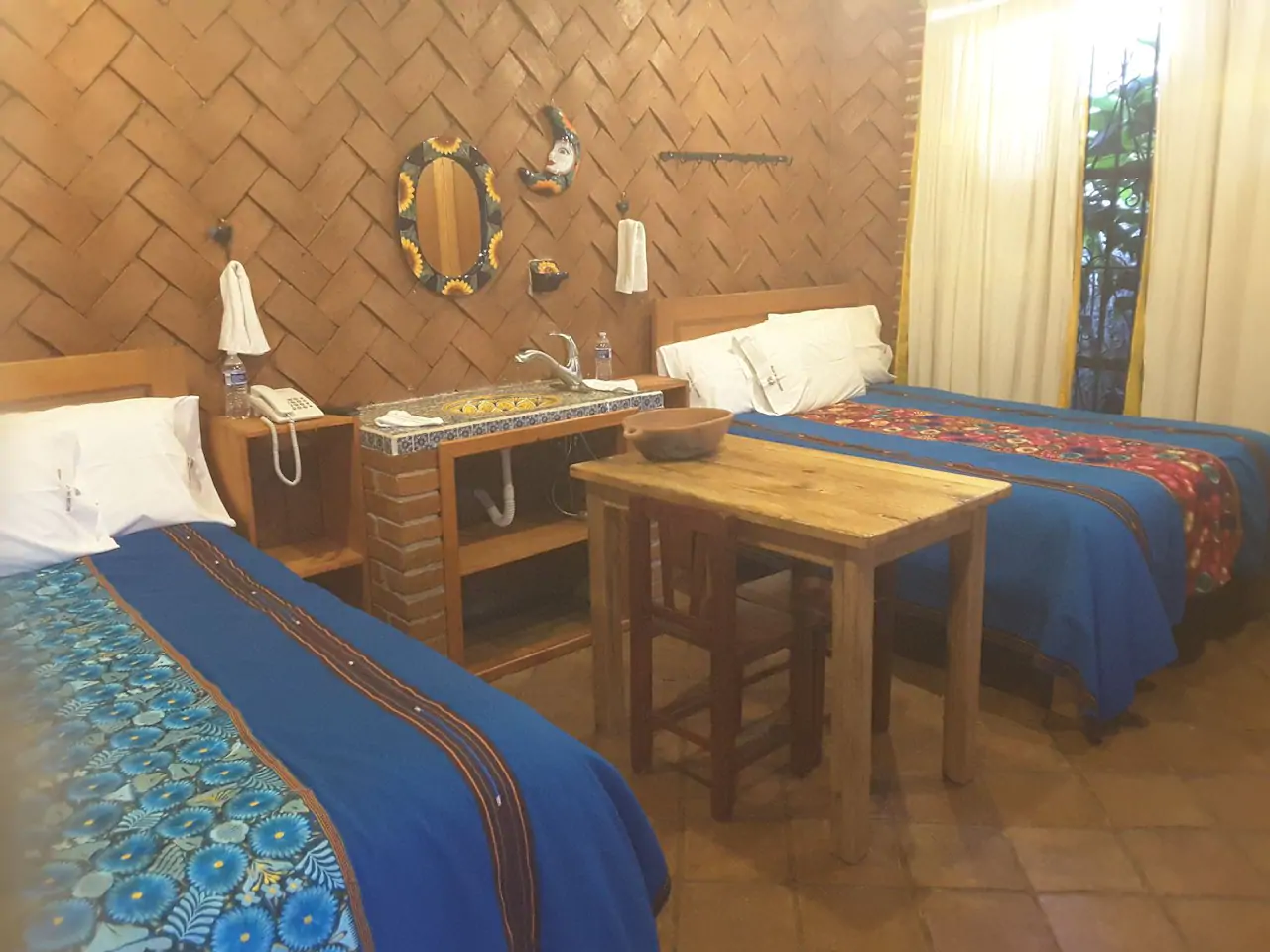
At least our place in San Cristobal is really nice and I love the bedspread. So tempted to buy one!

We went out for hog roast quesadillas for dinner and yes they are just as awesome as you think they are. Meaty and cheesy with extra crackling. After such a long day I needed some comfort food.

Mexican hog roast with crackling

Day 41 – Indian Nose Mountain (18/06/19)

Today started with good intentions to do a long hike up the San Pedro Volcano. Like many things with our trip to Lake Atitlan things didn’t quite go according to plan.

We started with a filling breakfast of bolognese calzone – that order they forgot to complete in time last night. It might have tasted better warmer.

6:15am cold calzone – breakfast of the ill fated

The boat trip took an actual geological age to leave. Apparently not many people wanted to go to San Pedro at 6:30 in the morning and instead we were still at the docks at 7:30. Ideally we wanted an early start because climbing a volcano in the heat of the day is amusing but not particularly effective. But we were still keen to carry on.

Over an hour and the boat is almost full

To make up time we took a tuktuk up to the start of the volcano reserve. Of course he tried to sting us half way up but I wasn’t having any of that. Especially since I didn’t really understand him and just shouted at him. It was a morning ok.

Our only tuktuk ride so far didn’t go terribly well – there is a reason we walk to places

Once we got to the start of the volcano we found out we couldn’t even climb all of it. Because of bandits the guides only go up half way. I personally look at the guides as my meat shield so they should bloody well go up to the top and take one for the team – meaning me. The guide wouldn’t even do a discount for doing half the job. Plus I quizzed him intensively on how many view points there actually would be on the route and there aren’t many since it’s within the cloud forest.

Plan 2 – we went back to the town so I could have some chocolate. Everything’s is better with liquid chocolate.

Chocolate fuelled our hasty re-planning of the day

We decided to look for another guide in the town to take us up an alternative mountain called Indian Nose where there are lots of view points and you can at least go to the top if you take a guide. We negotiated the price down but you definitely needed a guide for this one since there are many horror stories of bandits being approved of by the local police. This is a wonderful area to visit as a tourist! Why do people like this area and stay here for months!

Indian Nose mountain gains its name from its shape. It looks somewhat like a face in profile with a large nose and obviously the area is full of Indians (certainly not Mayans) so the slightly racist name stuck.

You can sort of see the resemblance to a face I think

Anyway we got in a car with some local Mayan people talking in their local language. There are at least four different Mayan languages in use in the different towns around the Lake Atitlan area. Two can be learnt if one is inclined, but the others are within the local community only. Fortunately as few of the locals speak more than one native language they all communicate with each other and foreigners in Spanish.

Anyway, after an interesting car ride we got turfed out in a random field and met up with two cousins who took us through the maize fields to their uncle who took us up.

Following our guides through the maize fields towards Indian Nose

Miguel was a lovely chap and believed I had the same name as his wife Clara. I didn’t have the heart to tell him otherwise so I had a new best friend and many hugs. He definitely had several machettes so who was I to tell him no.

Miguel did have enough English to point out the coffee plantations that are abundant over the hillsides. Coffee comes originally from Africa, but grows exceptionally well under shade trees in Guatemala, so now mainly comes from here not Africa. In a bit of a vice versa situation the cacao plant originally comes from Central America, but is now mainly grown in Africa.

Trekking through smaller sustainable shade coffee plantings

Despite all these trials and tribulations at least we had a safe walk in the hills and some nice photos. I am never coming back here again.

There be bandits in that there volcano
View across the lake – San Pedro is to the RHS

The lake used to have perfectly clear water but since the introduction of carp and intensive farming cyanobacteria and algae have flourished and everything is very murky. I know that they need to farm but couldn’t they avoid direct sewerage into the lake? Ewwww! Plus since the carp are bottom feeders they stir up all the sediment mixing the nutrients and make the water murky.

6% of the increase in algae in the lake is blamed on this style of clothes washing

I had chocolate and banana crepes to get over this whole day. At least I had a nice boat trip back with much less of a wait.

Crepes help everything get better

The boat ride back was much faster and at least it was warmer by the afternoon.

The boats don’t hang around once they set off

As we sat down to dinner a local celebration for a Saint’s day passed down the street. These little parades happen pretty much every day in Guatemala, if not for a Saint’s day then for birthdays, weddings, funerals or just general fiesta-ment. A guy at the front has a homemade rocket launcher (4inch pipe with a base tacked to it) and every hundred yards or so he plonks it on the floor and fires a rocket incredibly close to the crowd. You don’t get any pretty fireworks, it just whooshes up and explodes leaving some dirty smoke. Wakes you up at 3am anywhere in town.

Fiesta fiesta!

We liked our meal deal so much we came back again to try something else on the menu – sadly no extra helpings of garlic bread today though.

Look at all the vegetables

Day 40 – Walking around Panajachel (17/06/19)

We had breakfast at the same place so Dave could have the omelet I had yesterday. It was very good!

The omelette is still as good as yesterday

Today we wanted to explore some of the mountains that surrounded the town. There have been a lot of reports of bandits in some of the hills so we did a lot of research beforehand to make sure we would be safe. Sadly despite our planning we didn’t take in account that we were in rainy season and the trail was very muddy. At least we got some good photos from the top.

Looking across Lake Atitlan towards Volcan San Pedro (R) and Volcan Atitlan (L)
Panajachel from the mirador at San Jorge

Instead of the muddy trail we walked down the road and took a photo of the waterfall on our way to the nature park.

Waterfall hasn’t really started this early in the rainy season

At the Atitlan Nature Park we found out it was a good job we didn’t try the muddy trail since the linking bridges are out of order so we wouldn’t have been able to get down all the way. The park had a butterfly area where some of them were bigger than my hand.

Pretty orange butterflies
You see these black/white butterflies everywhere
Huge blue butterflies

They also had ziplining but the park was so overgrown it didn’t look like you would have a great view of the lake so we decided not to do it. We tried to get some more photos of the lake from higher up in the park but again the very verdant trees somewhat stymied our plans.

We had calzone for tea but they mucked up our order and forgot one of our pizzas. They finished cooking the second pizza once we were finished so we took it away so we could have it later.

One calzone only for tonight

Day 39 – Travel to Lake Atitlan (16/06/19)

I might have caught what Dave had a few days ago and didn’t sleep well at all. Instead I tried sleeping on the bus to Lake Atitlan which we caught very early at 7am. However there were a ton of switchbacks and many people on the chicken bus so I didn’t grab a wink. At least I had a seat.

Bluebird busses just become more awesome with age and extra bling

We had breakfast at Panajachel and I had a super cheese and ham omelette and Dave was jealous again. This theme will never end.

Tasty omelette is overpowered by the amazing top

I was rocking my new top I had brought the previous day in Antigua. It is a local style of top worn by all the Mayan women with differing complexities or embroidery, we saw many of the local women around Lake Atitlan wearing the traditional dress. Usually it is coupled with a wrap around one size fits all skirt as well.

Lake Atitlan was quite choppy today

Dave did a research run while I napped and got info on laundry and shuttles so we were prepared. It turned out we could have been more prepared – check out the post for the 18th where everything went wrong!

I looked at so many of the stalls of pretty clothes but managed to resist. I do have a bit of an issue with backpack space so sadly couldn’t purchase all the colourful things. So many pretty colours!

Haggling skills were not tested here yet…

We then had dinner at an incredibly cheap place which included soup, garlic bread and meat. I always like to save dem pennies.

The tinned vegetables were very welcome

Day 38 – Walking Tour around Antigua (15/06/19)

We started the day early to get a view point over the whole of Antigua. We walked up Cero de la Cruz hill before breakfast even. Antigua is the former colonial capital of Guatemala and is a UNESCO world heritage site (our 8th this trip).

That hill looks bigger than this one
Early morning hill climbing is tiring without breakfast

Breakfast was back at the same place as yesterday but this time Dave took my advice and also had the awesome chocolate crepes.

More chocolatey goodness

We went on a walking tour around Antigua and visted the Iglesia de la Merced where the Mercedarian order was the first to construct a monastery in Antigua. The church was built after the tremors of 1751, and thus survived the 1773 Santa Maria earthquakes as its designer had incorporated thicker walls and stout arches. However with the relocation of the capital the Mercedarians were forced to relocate and it wasn’t until the mid 19th century that a new parish took up residency in the church.

Iglesia de la Merced

Before we set off on the rest of our tour we caught a glimpse of smoke and ash from the top of the nearby volcano, the well named Volcan de Fuego. According to our guide we were quite lucky as it only happens about once a month. The adjacent volcano Acatenango can be climbed as a two day trip, but our guides advice was not to climb Fuego unless you wanted a fiery death.

Fuego (L) spits smoke from behind the clouds, Acatenango (R) is more polite

Our next stop was the Arco Santa Catalina. Arco Santa Catalina was constructed in the 17th century in order to connect Santa Catalina convent to the school across the road. It is actually an enclosed bridge so that the cloistered nuns could move freely between convent and school without going out on to the street. The clock tower was added in the 1830’s and although it no longer connects to the buildings either side the arch and bridge remain.

Early morning photo to beat the tourist crowds
The arch gets much busier in the afternoons

Catedral de San Jose is Antigua’s cathedral, originally built in 1541 it suffered a lot of earthquake damage and was eventually demolished in 1669. A new cathedral was built and consecrated in 1680 and by 1743 it was Guatemala’s largest cathedral. Sadly the 1773 earthquake badly damaged the cathedral and there was great debate over abandoning it, eventually the cathedral moved to the new capital city. The church was partially rebuilt, but its original sacred artefacts have moved and the gold from the altar was taken in 1816 to make new ones in Guatemala City cathedral.

Catedral de San Jose
The cathedral lost most of its roof

Tanque la Unión was used as a meeting place in colonial times. The fountain is nice, but it actually served a very practical purpose, beneath the shaded collonade stone basins are fitted into the side of the fountain. Each basin has a little soap holder and could be used to wash clothes with clean water from the fountain. The basins then drain away to separate the dirty water. This would have been a busy communal space when it was built in 1853.

The pretty side of the fountain
The business end of the fountain

Iglesia San Francisco was the last stop on our walking tour. It is one of the most popular and frequented churches in Antigua, as it contains the shrine of Santo Hermano Pedro. Santo Hermano Pedro had his own church in the town (which we visited yesterday and stopped by again today) but it was his wish as a Franciscan to be buried at the monastery that he considered his home.

The Franciscans arrived in 1541 when they constructed a small chapel, this was destroyed in an earthquake in 1565, so they built a new church a few blocks away in 1579. This was the first construction on the current site and parts of it still exists today. It was reinforced and survived the earthquakes in 1691, but was badly damaged in 1717 and 1753 and then partially destroyed in 1773. Today it is partially reconstructed and is an active church, but is also surrounded by partial ruins.

Iglesia San Francisco

For lunch we went to the same place as yesterday so Dave could have what I chose – seems to be a running theme today!

This time everyone gets tasty chicken and potatoes

In the afternoon the heavens opened at 2pm because it’s officially rainy season so we worked on a few blog posts back at the hostel. Once it calmed down we went out for tacos and enchilada at a Mexican restaurant and then I might have bought a cute top I saw – but more on that tomorrow.

Steak tacos were yummy

Tragically we were waylaid on the way home by the temptation of ice cream.

Tasty ice cream

Day 37 – Museums in Antigua (14/06/19)

I had the most amazing breakfast ever! I had researched about this place and it’s chocolate crepes and was dying to try them. They were every bit as good as I hoped and dreamed of and they were filled with strawberries and banana and I can’t even tell you how good to chocolate was. Dave was jealous with his boring egg filled crepe.

Happy for chocolate & banana crepes

Our second aim for the day was to get Dave high on coffee which after several weeks off the stuff meant only two small cups. Apparently Guatemalan coffee is like rocket fuel and even an americano sends you jittery. Every coffee shop we found either grinds or even roasts their own coffee to achieve their version of the “perfect” guatemalan coffee.

Coffee is a way of life in Antigua

We went to the Monastery and Church of Recollecion where everything was collapsed. The Recollecion monks petitioned the town council to be allowed to build a Monastery in 1695, but were refused as there weren’t enough monks to support it. In the end though construction began in 1700, and was finally complete by 1717 but suffered from numerous earthquakes. It was almost immediately damaged in the earthquakes of 1717, and again in 1753, and then more severely in the Santa Marta earthquakes of 1773 where it lost significant structural elements. Since then it has gradually collapsed in further earthquakes and has been used for local building materials until the site was protected. It has even been used for sports facilities and as a soap factory at different times in history.

Stairway to heaven?
Some huge sections of wall are just lying around to be climbed on
Propping the place up

The groundskeeper was very keen that we see all the ruins, and in some broken Spanish we were sent to investigate the old kitchens. They were remarkably well intact given the damage to the rest of the site and even retained some of the stucco decorated ceilings.

The arched ceiling of the kitchens survived remarkably well

The Santa Marta earthquakes started on 29th July 1773 and the aftershocks continued until December. Antigua was the colonial capital city at that time and suffered 500-600 dead in the initial 7.5 earthquake, and another 600 dead due to starvation or disease afterwards. The earthquakes in 1717 had taken enough effort to rebuild from so in 1776 rather than rebuild Antigua as the capital city it was moved to the current location of Guatemala City.

Claire found a fountain

We then had lunch where sticking to the theme for the day, Dave was jealous of my food, because I had some awesome chicken and potatoes which were cooked over an open wood fire. Dave had sad looking chorizo and potato salad. It was a great place where all the locals went, where food was placed in fire and given out and mystery drink of the day was included in your meal.

Rotisserie chicken is the favourite by far
The potatoes are seriously amazing

After lunch we stopped for a quick photo outside a nearby church. We would later find out that it is the Church of Hermano Pedro (Brother Peter). It is still a church, but the buildings on the right also operate as a social welfare project, providing low cost quick access health care clinics. Although Guatemala provides free state healthcare waiting times and quality of care are so bad anyone who can afford it pays for private healthcare. Hermano Pedro bridges that gap by offering quick healthcare at a fraction of the price of most private clinics – in the mornings the queues are long…

We went to a hotel which looked like a place my Mum would stay in (very expensive). The hotel Casa Santo Domingo was within the ruins of what was the Santo Domingo and Santo Tomás de Aquino church and convent and had been tastefully built up around it. As part of an agreement with the city the hotel allows non-guests access to the museums it has on the church and convent, colonial era art, silver and pre-colombian glass and archaeology. At one point we were trapped in a crypt because the rain came down very heavily at 3pm. I particularly found the Mayan pottery interesting, it had modern reinterpretations next to the pieces which made it a bit different from other museums we had been in.

Crypt, burials and ossuary below the church
Mayan pottery
Fancy silver in the silver museum
Freaky levitating child with weird statue of mother (I think the crown is the exhibit)

After so much coffee Dave decided to sleep off the effects, or he might have been ill. Anyway it had been a busy day.

Day 36 – Travel to Antigua Guatemala (13/06/19)

Luis recommended we take a taxi to the bus station but instead we decided to walk 40mins with our heavy backpacks on because we were going to spend the rest of the day sitting down. We might as well get some exercise.

Getting to the busses involved battling through the local food market – always an experience with bulky luggage. The bus station somehow resides within the market, making it a tight squeeze as busses leave and people rearrange their market stalls to let the bus through.

Busy markets are no obstacle to determined bus drivers

I was particularly impressed by our first bus of the day where the driver regaled us with such hits as ABBA’s Chiquitita, then Celine Dione’s My Heart Will Go On, and Wham’s Careless Whispers. Complete with LEDs all over the bus which flashed in time with the beat of the songs. Sadly I recognised all of these songs with Spanish lyrics.

We had to get a series of buses from Santa Ana to our end point at Antigua. First we went to Ahuachapan and then to the border crossing at Las Chinama. At Las Chinama we had to walk a half mile of no-mans land over a bridge and up a hill, wondering if we had accidentally entered Guatemala illegally. After finding Guatemalan immigration we then had a bus to Guatemala City and the our final one to Antigua City. At least it was cheap!

Goodbye El Salvador
Hello Guatemala – well about half a mile up that hill anyway
One lonely chicken bus awaits in Guatemala to take you to Guatemala (city)

After experiencing papusas last night we were on the hunt for them again, and fortunately found a small El Salvadoran place that could meet this demand and supplied horchata in impressive beer glasses.

Horchata and Pupusas – it doesn’t get more Central American than this

Pupusas originate with the pre-colombian Pibil tribes and implements for making them were found at Joya de Ceren. Although they have been around a very long time they weren’t particularly widespread until relatively recently. In the 1940’s they were mostly only found in large cities and it wasn’t until the Salvadoran civil war in the 1980’s that pupusas really spread outside of El Salvador as communities migrated to avoid the conflict.

Horchata is my favourite drink and is found all over central america, however it originated in western Africa. Based on creating a “milk” from dried and sweetened tiger nuts, the drink has varied through history, reaching Spain with the Muslim conquests and then again as it arrived in central america with the Spanish conquests. Nowadays in central america it is most typically made from white rice and flavoured with cinnamon, though the exact flavour and method varies between regions and even individual restaurants.