We took a minivan to Semuc Champey which was about 8-9 hours away. Slowly the scenery changed and it got more and more mountainous. This was the first time we had seen proper geography since we arrived in Mexico since the Yucatan peninsular is very flat and composed entirely of limestone.
Bye Flores
I particularly enjoyed crossing the river on a raft powered by two small outboard motors. I was impressed they could land it which such accuracy given they were both on the right hand side of the raft.
Excellent ferry skills from this chap
One of our two stops in our 8 hour bus ride – stretch while you can
Soon we came to many switchbacks going back and forth on the road winding around the mountains. Unfortunately I smelt petrol from another car and with all the switchbacks was sick. Luckily another passenger in the minivan offered a bag. I was very glad when we got into Coban and we had Maccy D’s fries and Lipton iced tea. As we got nearer to Lanquin the roads became more interesting as they turned to gravel/rubble rather than paved surfaces. It was one at a time if you met someone coming the other way, though the locals happily overtake everything with a cheerful beep beep.
Mountains are definitely a thing in GuatemalaOur prison/bus after dropping us off – fortunately the tarp saved our luggage getting wet
Once we got to Lanquin our fun hadn’t stopped there and we got on a pick up truck with benches in the back. It started to drizzle so they put up the tarpaulin around us and it got so hot underneath it. Luckily it stopped raining pretty quickly and we got some amazing views of the mountains before we arrived at our hostel for the night.
The road between Lanquin and Semuc is a novel tripTo avoid the holes in the bridge extra planks have been nailed down over themYou get a good view out of the side of the pickup – if not a comfy seat
The hostel served really nice food but I was still feeling a bit unwell and didn’t fully enjoy my falafel and humus. All the food served here was more of a Middle Eastern flavour which was different from our previous meals.
We got up early for our transport to Tikal at 4:30am. We had opted not to do the sunset tour which left at 3am because who wants to get up that early and Tikal is pretty misty in the morning so we weren’t likely to get clear photos.
The guide was great and explained what the site would have looked like in pre-Hispanic times. First we went up a small temple so we could get above the trees and take photos of the other much taller temples. When he clapped his hands in the centre of the plaza where the altar would have been it echoed around the clearing. We then walked past a temple which had not yet been excavated by the archologists which was the same size as the previous temple. It just looked like a mound covered in trees so I can see how the temples remained hidden for so long.
First temple we stopped at was short, but had many altar stones and stelaeAnother short temple lurks beneath this hillock
The guide was also very good at spotting wildlife and showed us a tarantula hole and got it to poke its head out. Sadly no one screamed. Our best guess is it was a Mexican Red Rump Tarantula.
Tarantula attack!
We then went to the great plaza where there was two temples to the east and west, the Sun and Moon Temples respectively. Completing the plaza was the great Acropolis to to the north and Necropolis to the south. We couldn’t climb up the Sun Temple but could climb up the slightly smaller Moon Temple and it even had a wooden staircase with even stairs to help you get up. I was very appreciative of it as it made it to much easier to get up.
Sun temple seen from top of Moon temple
Hallelujah stairs
The guide pointed out a toucan and a rare green toucanet to us. Toucans apparently only live in primary forest which contains larger older trees with large enough hollows for their nests. Toucans don’t generally build their own nests, so rely on finding pre-existing holes in trees from damage or woodpeckers.
Yellow-throated or Keel-billed Toucan?
Temple 3 hasn’t been excavated, but was actually the last temple built on the site around 810AD. It is known as the Temple of the Jaguar Priest because of a figure within the temple.
Temple 3 hasn’t been excavated
Mundo Perdido or the Lost World complex is a group of buildings which remain intact and unaltered by later periods of construction at Tikal. The largest structure in the group is the Lost World Pyramid and you could get some great views from the plateau at the top.
Mundo Perdido pyramidYou can see Temple IV from here
We also spotted a spider monkey hanging out in a nearby tree. They are social animals that live in groups of 30+, but split up to forage during the day (hence we only saw the one). The common name of spider monkey comes from the disproportionately long limbs and tail.
Spider monkey sitting in a tree – just long enough for a photo
Temple 4 is the tallest at Tikal and was used for many of the views filmed in Star Wars Episode IV. Dave and I were particularly geeky in discussing the films while we caught our breath at the top.
Star Wars temples
The tour ended in time for the 11am bus but we decided that just wasn’t enough time so we walked over to the north eastern complex. It was getting humid in the jungle but at least we were under the trees and we saw some mid-sized temples and a stela.
Temples in the north complex are definitely easier to climb
Altar stone & stelae at north eastern complex
Since we had an hour to kill we paid to visit the museum as well. Sadly it was all in Spanish but I just about got the gist of it. The temples were discovered by Europeans in 1848 and archaeological expeditions began in the 1880’s, the site had never been forgotten by the local population. Tikal began to decline (along with other Mayan cities) around 810AD, with the last temple constructed then; by 950AD it is presumed the city was almost completely abandoned. Although no records exist to show it was attacked, it is likely warfare forced the population to cluster around the city which resulted in intensive farming and depletion of the agricultural land leading to population decline.
Before we moved on we spotted a humming bird who kindly sat still for a photo.
Hummingbird
When we got back to Tikal the heavens opened and a huge thunderstorm rolled in. We waited for it to ease down so we could grab some food. So far we had only had the trail bars and crisps we had packed for Tikal and we were starting to get peckish. At least I got to use my rain mac I have lugged around with me everywhere!
As ever we had our morning fry jacks and then it was on the ferry to get to Belize City. I have to admit I was getting itchy feet to start doing something. You can apparently have too much rest and relaxation in a hammock! I just prayed our next accommodation had better WiFi, it was rather flaky for working on the videos but it was just good enough to download all the episodes of Good Omens – priorities.
Bye Caye Caulker
Now we could have chosen a nice comfortable tourist shuttle to cross the border to Guatemala but instead we opted for the bouncy local buses. This was mainly because we didn’t know how much time you got with the shuttle to change money into Guatemalan Quetzals because our last border crossing we didn’t see anyone to grab some Belize dollars from. At least I got to watch Good Omens for the journey – it’s so good and based on my favourite book!
This was our first Collectivo with luggage strapped to the outside – it survived
It was a pretty easy process crossing the border and we were back to (trying to) speak Spanish to everyone. We grabbed a minivan pretty quickly heading towards Flores but it waited a good 10 minutes for more people and there was this man trying to sing and failing badly. It was so painful to listen to him miss every note, despite my glares he continued to murder every song. I was glad when we set off.
Over the course of our journey through farmland and forests we ended up with at least 21 people. All the kids had to sit in laps. At least I was next to a window for some air!
Finally we ended up in Flores and we walked for 30mins to try and find an atm which would accept a Mastercard. I was worried for a while as several atms just spat the card back out but we finally found one which worked and promptly got out the max amount we could. We had read that this was a possible issue in Guatemala so we would have to be careful to always have a float.
Crossing the bridge in to FloresYo Peten – this sign is the hub for transport out of Flores
We booked up transport and a guide to Tikal for tomorrow and transport to Samuc Champey the next day. With everything organised for the next few days we had dinner made of burritos with tomato sauce on top – it was weird and not my most favourite meal. Then time for one last good omens episode and an early night as we had to be up early the next day.
Weird ketchup burritos – however Guatemalan “Tiky” and “Crush” juices are amazing
Since it’s the start of a new month here’s a map of how far we have travelled so far.
Our hostel was great about us arriving a day late due to our transport muck up and allowed us to stay an extra day. However I hadn’t planned in the itinerary for a whole extra day on the island (we would have arrived originally at 6pm) so I was a bit stumped on what to do. We got up at 5am to try and get some sunrise photos, sadly the cloud cover meant the photos weren’t that spectacular. Also the internet was too patchy to catch up on blog posts so instead I spent many hours in the hammock reading and listening to podcasts.
05:16 sunrise timeSetup for the day
A funny thing about the Belize dollar is it looks just like the UK 50p in shape and even has the Queen on one side. Belize gained independence in 1981 and it was granted this so late because Guatemala contested the territory and only formally recognised its independence in 1991. It is still contested terrority and it was only this May that they had a referendum in both Belize and Guatemala to agree to give the decision on the border to the International Court of Justice.
We had burrito for lunch, with Belize’s special pineapple flavoured fanta, followed by some more hammock time.
Burrito time (with pineapple Fanta)
View of the Palm Trees
In the evening we again went to Wish Willy’s for some more home cooked food. We then went to the Lazy Lizard for drinks but were put off by the abysmal karaoke night. There was barely anyone there because I swear the singer had sent them running. To save our ears we headed back to our hostel to pack our bags.
Today was a chill day to relax after diving and we started, like with most days, with fry jacks.
A new fry jack to try
We headed to the split which was was created by Hurricane Hattie in 1961 and made wider by hand dredging. It literally splits the island in two and there’s a bar called the Lazy Lizard there. It’s the in place to grab a drink and relax by the water.
Caye Caulkers town sign
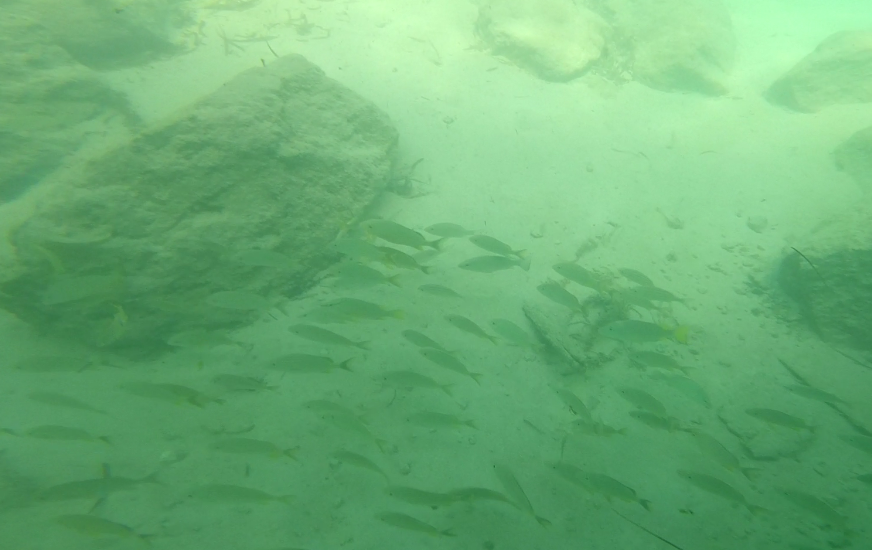
After sunning myself for a bit I went for a dip in the water. The current going through the split is very strong and it took a fair bit of work to swim against it to the inlet where the half submerged tables and chairs are. Underneath the pier I found a whole bevy of fish hiding from the pelicans and other birds. It was quite surreal to see them all bunched together so close and they moved in concert together away from me when I got close.
Fish shoaling under the deck at the Lazy Lizard
We went to Kareem’s for a late lunch and had bbq meats off his grill on the beach.
BBQ food is good foodClaire needed ice cream of course
To top off a chill day we had drinks for the evening followed by a stroll to try and find the airport at the other end of the island. It didn’t take long since it’s such a small island.
Paddling at sunsetHappy hour rum cocktailsI think the bar swings become harder with more rum
After another fry jack breakfast it was an early boat ride out towards San Pedro for our dive.
Fry jacks come in many flavours so this a different breakfast to yesterday
It took about 30 minutes to get to San Pedro and we were diving off Tackle Box and Esmeralda. The Belize reef is a UNESCO and this would be our third one this trip.
Glorious sunshine and calm waters – doesn’t get better than this
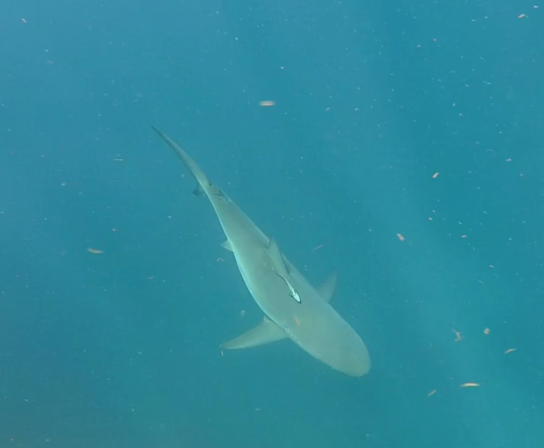
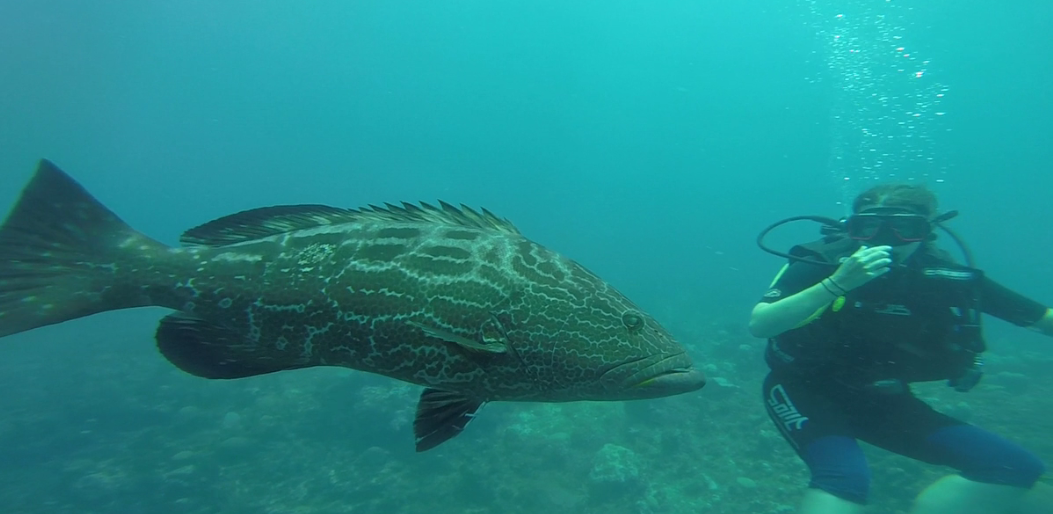
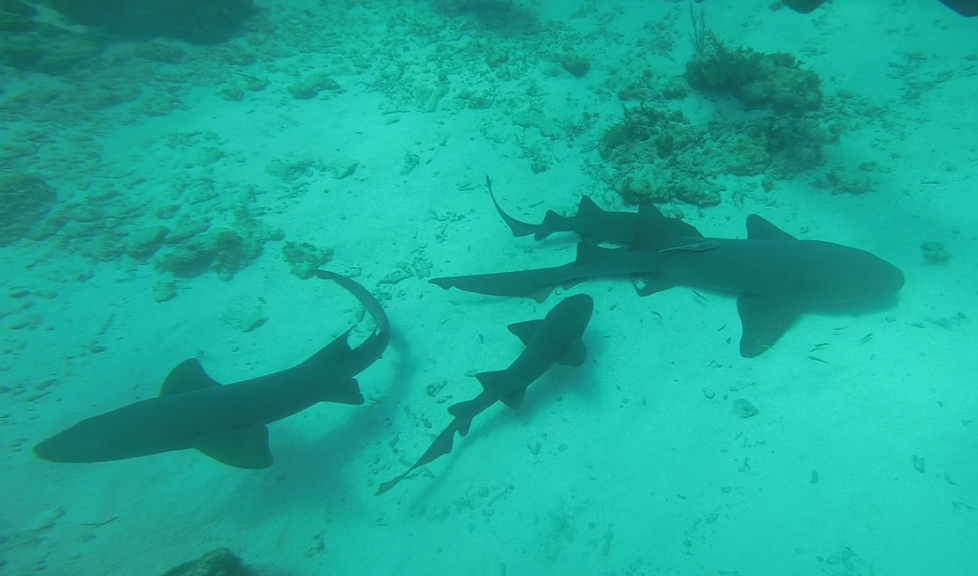
Tackle box dive was into a reef canyon and before we had even started descending there were sharks milling about underneath us. I very much suspect they are used to being fed by people but at least our dive leader didn’t. At Tackle Box we saw a lot of sharks at first, both Nurse and Reef sharks came up to the boat straight away. Caribbean reef sharks can potentially attack humans, but these ones had no interest in tasting the English divers. We also had a huge Grouper keen to join the party, it followed us for a good 5 minutes.
Fly by from a curious reef shark
Gerald the Grouper was not camera shy at all
Between the dives we had fruit to munch on and the crew on the boat talked to each other in creole. It sounded very similar to Jamaican Patois and left me half understanding everything they were saying but not all of the details. We also had a chance to snorkel at a nearby reef but didn’t see a lot we hadn’t seen already on the previous dive and the seaweed kept on getting stuck in my hair. I decided then and there that we wouldn’t also be doing a snorkelling trip from Caye Caulker. At least with diving you are far below the seaweed.
At Esmeralda we saw sharks far more frequently, mostly Nurse sharks, they are so used to divers a group of 4 including some juveniles just tagged along for a little bit to see what we were up to. We also saw a wider range of sea life than we had at Tackle Box, a Moray Eel was hiding out in the coral, as were some Lobster and Crabs.
Baby shark do-do-do-do
Moral eel hiding in a dark cave
We were reminded frequently that if we saw any Lion fish it was our civic duty to catch them and turn them into ceviche. Lion fish are actually an invasive species on the Belize reef and are damaging the ecosystem so everyone is keen to do their bit and catch them. Given the venomous spines I’m fairly glad we didn’t need to work out how one catches a Lion fish with your bare hands.
Venom spike fishy (Image: By Alexander Vasenin)
After the diving we had an hour of free time to wander around San Pedro which is a town on Ambergris Caye. It’s much larger than Caye Caulker and it made me glad we had chosen the island we did. It’s much more chilled and relaxed with less tooting golf carts driving around. We dried off a bit in the sun and had nachos to eat. Diving always makes me so hungry.
We did plan an early start but ended up catching the later 9am ferry to Caye Caulker. We sat on the top deck of the small boat and it was great to feel the wind in my hair as we were hurtling by the reefs. Everything is so low lying and not a mountain in sight, I think I could almost see the curve of the earth.
Water taxis are the easiest way to and from the CayesPassing another of the Cayes on our way to Caulker
First things first was to grab some breakfast and I had heard a lot about the famous fry jacks in Belize. These are deep fried dough with your choice of savoury filling inside. I went for cheese and chicken and it was delicious!
First and certainly not last fry jack of our visit
Caye Caulker is incredibly narrow and it’s just four blocks from one side to another. There are some golf buggies people drive round the island but mostly people just stroll along at a slow pace. Everyone is so chill and relaxed, it feels much more similar to the Caribbean than Mexico.
The whole town of Caye Caulker
We spent the day at Caye Caulker going around dive shops deciding if we will do diving or snorkelling while here. With all of the Sargassum Seaweed there aren’t that many tourists so it was guaranteed to be a small group. In the end we decided on diving because we had a better chance of seeing sharks than we had of seeing manatees while snorkelling.
A panorama around the crossroads in townNot much else to do but enjoy the sun
In the evening we decided to go to Wish Willy’s for dinner. This is a great place in a backyard where the owner Maurice and a friend work on the grill and serve up great food. Maurice goes around to everyone seated under the fairy lights and asks if you want fish, chicken or shrimp and after a while he comes back with a great plate of food. You fetch your own drinks from the cool box and Maurice just tells you what it all cost at the end.
This close to the sea it had to be fish for dinner
After a great breakfast of mexican scrambled eggs and mollettes it was time to say goodbye to Bacalar and drop off the car at Chetumal. Everything went well although we did have to explain to the guy that dirt is not the same as a scratch on the car. It was so banged up to begin with I don’t know why he was complaining anyway.
Mexican scrambled eggs with refried beans
A final test of the swing chairs at El Manati
We then grabbed a taxi to the bus station. He was very helpful and took us to an alternative bus station where he said all the buses to Belize went through, but when we arrived at 11am they said the next bus was at 2pm. Even with our heavy backpacks we decided to walk to another bus stop that Dave’s research said should have regular buses. However when we arrived it was completely overgrown and abandoned so I think that information was a bit out of date! As it turns out the busses had been moved to this old terminal 18 months ago, to reduce traffic in the market place, but moved back about 6 months ago.
When we got back to the original bus stop we found out there were less frequent buses today because it was a public holiday in Belize – Commonwealth day. It was looking less and less likely we would make our connection for the ferry to Caye Caulker. Thank god we had internet and could move our booking and find somewhere for the night in Belize City.
We sat on the bus for hours waiting for it to leave. At least we were near shops, so had an ice cream to cool down while we waited. Finally an hour later than we were told we set off and crossed the border to Belize.
Ice lollies kept us sane listening to the PA adverts from the market shops
We were treated to James Bond die another day in English on our way. So far all of the films on buses have been dubbed in Spanish but Belize’s official language is English since it used to be part of the British Empire as British Honduras. I had forgotten how bad that film was.
We did end up arriving in Belize City too late for the ferry but we found a guesthouse close to the bus terminal which had wonderful air con and was run by a really friendly and welcoming family. There had been stories about Belize City being unsafe but it was well lit in the part we were in to walk around. We didn’t end up going out again because we still had some sandwiches we prepared the night before to eat.
We went to the ruins Dzibanche and Kinichna in the morning. They were much less impressive than yesterday’s ruins but it was nice to have the whole place to ourselves. Dzibanche was once the capital for the Kan dynasty before it moved to Calakmul, so it contains the earliest references to this dynasty. Kinichna is virtually next door and included on the same ticket, so we visited that too.
Temple at Dzibanche
The entrance to Kinichna is right next to this rather impressive tree – we aren’t sure what is roots, branch or vine in this lot. Personally I think it’s a portal to the faerie realm.
Claire’s latest favourite treeThe temple at Kinichna was built in three levels at different points in history
We had lunch at our favourite restaurant – El Manati. I had the chilaquiles because I can’t get enough of the green salsa and queso fresco (similar to a feta cheese).
Salsa verde is the best
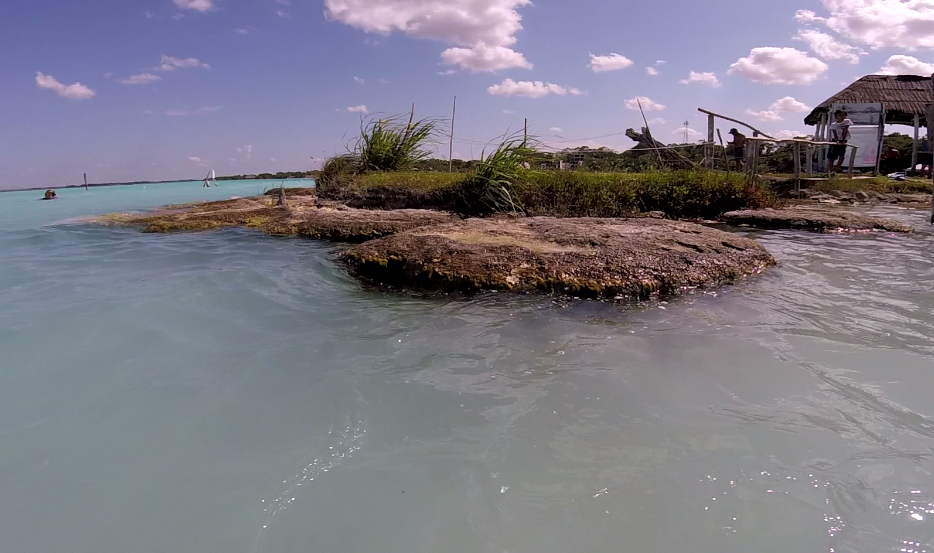
We then drove further down the lagoon to visit some different cenotes. At cenote cocalitos we saw stromatolites which are sedimentary rocks. Stromatolites are generally found in shallow water and are built up of layers of bacteria or microbial life which live on the rocks surface and form the rock as each successive layer dies and is built upon.
Stromatolites
We swam out to cenote esmarelda as well but unlike the other day both of these cenotes gradually got deeper until we couldn’t see the bottom and were much less dramatic. We were visiting on Sunday, so the area we had parked up in was filled with local families relaxing and enjoying the lake which gave it a friendly atmosphere.
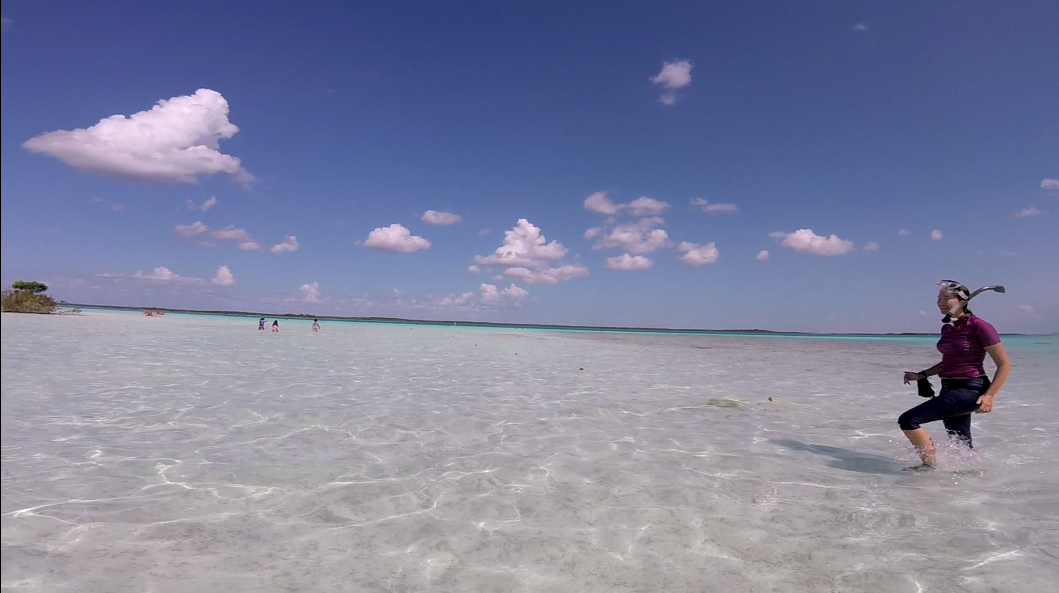
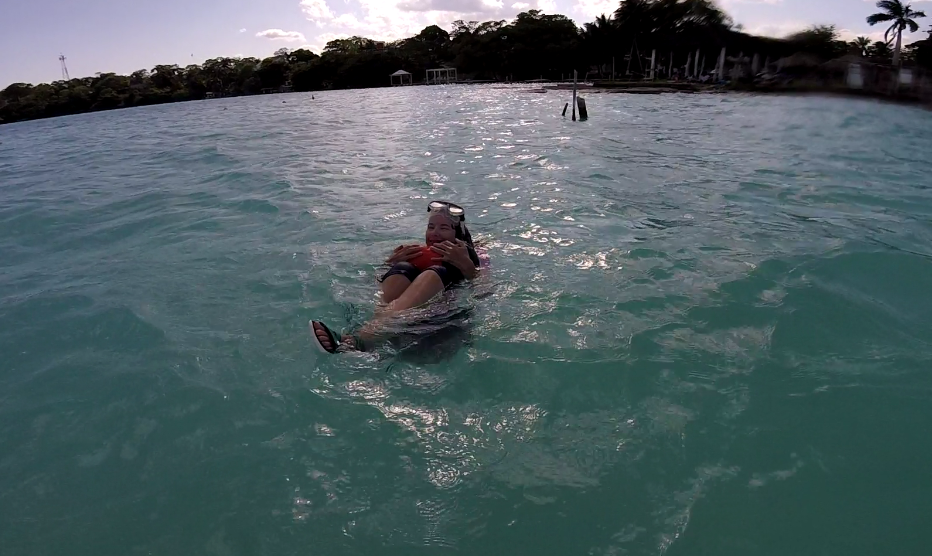
The edge of the lake stays only a few feet deep for a long way so you can just walkOr the lazy option is to use your drybag as a float and get someone to tow you around
We then had tacos for dinner on our last night in Bacalar at taco regio. Our Airbnb host had recommended it on our first day and we just hadn’t managed to get there when it was open until now. It was a good end to our time at Bacalar which was lovely.
It was an early start at 5am so we could visit our second UNESCO at Calakmul. It was a long 4 hour drive but we arrived at 9am so we still had the coolest part of the day to explore. Dave particularly liked the potholed route off the highway in the park which took us 1hr 15min to navigate. In all honesty you could probably do it in 50mins, but we were stuck behind a very cautious driver with an uncanny ability to swerve into every pot hole they could find rather than go around. To be honest we’ve driven worse mountain roads in the USA before, there are no cliffside drops to contend with here.
Oscellated turkey fears no car
Along the way we saw lots of Oscellated Turkeys. Their feathers were much brighter than a peacocks and they gobbled loudly at us. Oscellated turkeys have lots of orange nodules on their heads and are close relatives of normal wild turkeys, though they are generally smaller. The oscellated variety is native to the Yucatan peninsula and lives as far south as Belize and Guatemala. It was an endangered species due to hunting for subsistence and disruption due to changing land use, but is now considered to be recovering.
We were prepared for there being no food stands or restaurants at the site so we had made cheese and ham sandwiches the night before for both breakfast and lunch.
The site at Calakmul and its temples are a UNESCO world heritage site due to their importance throughout Mayan history. The site is within the Tierras Bajas forest which is part of the Mesoamerican biodiversity area, the third largest such area in the world.
UNESCO #2 of our trip
We followed the site map straight to the temples we could climb and went straight to the top. The view was great but it showed us an even taller temple to climb up!
Yup, there is a bigger temple to climb yet
Well we then climbed right to the top of the even taller temple. Phew that was exhausting work but worth it.
During its heyday Calakmul was the capitol city of the Snake Kingdom through the Classic period. Its population is estimated to have been around 50,000 people and it comprises a total of around 6,750 buildings. The kingdoms control extended up to 150km away so it was a major centre of power in the Mayan world and maintained a rivalry with Tikal to the south.
Climbed the right temple this time – look at the tiny one behind
Pyramid 2 is the tallest on the site at 45metres and was the one we climbed, its within the central temple district of the site (approx 2km square area within the larger 20km square city). The pyramid contains 4 tombs beneath it and reached its final height through the typical Mayan process of building atop previous temples at different points in history.
Its a long steep climb back down thoughThe awkward climb back down is always fun
We then walked around the rest of the site which included several plazas and acropolises with many stelae which made up the central district of Calakmul city. These would have housed royalty and high ranking persons as well as providing a commercial and political centre to the city.
Many stelaeThe grand acropolisStructure 13 contained a tomb beneath
Stopping to find some shade we spotted some bats roosting above us, which we could identify as large brown bats. Unlike the Oscellated Turkey, large brown bats are in no way endangered, as they thrive throughout North and Central America and the Caribbean. Their beady little eyes were upon us as we disturbed their vampiric rest, so we moved on to avoid any rabies.
Big brown bats eyed us up
It was a long drive back so to break it up we visited Kohunlich ruins. Kohunlich is a reasonably sized site, however it is mostly unexcavated so only the largest central buildings can be seen. The temple at Kohunlich is known as the Temple of Masks as large mask carvings were found exceptionally well preserved. The masks were constructed in 500AD, but then a final layer of building work obscured them in 700AD and so protected them until the site was excavated and they could be revealed.
Temple of masks excavated to show the masks from 500ADThe lighter coloured stone is from restoration workAcropolis at Kohunlich










 Waffle Around